
The Yellow Line is not a sightseeing route.
It runs through working neighbourhoods, hospital zones, residential layouts, and industrial edges - places built around daily necessity rather than leisure. For most people, this line is about getting somewhere on time, not exploring.
That is precisely why it matters.
This guide looks at the Yellow Line through use, not novelty. Each stop here is anchored to a single place that gives the station meaning — somewhere people already walk to, climb, eat at, or loop around as part of routine.
These are not “must-see attractions.”
They are stops that reward getting off.
RV Road: Jayanagar 4th Block Market
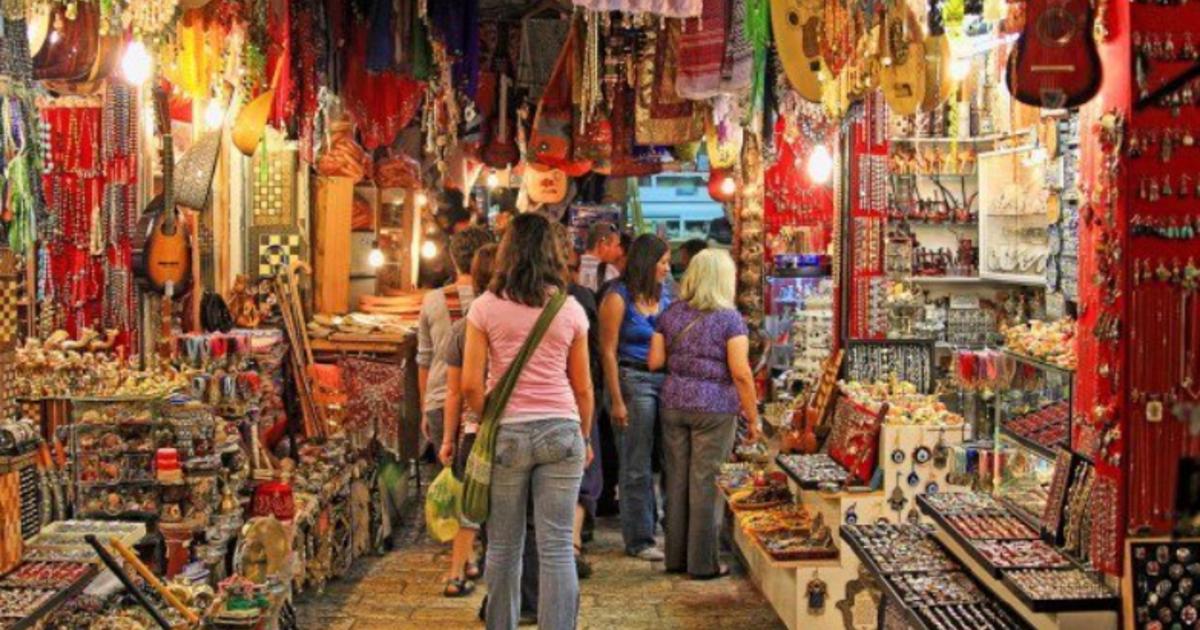
Photo source: Whatshot Bengaluru
RV Road opens into one of South Bengaluru’s most legible neighbourhood grids. Jayanagar 4th Block Market anchors the area not as a destination mall, but as a functioning daily market that residents rely on.
The complex and the streets around it bring together textile shops, book stores, old bakeries, pharmacies, flower vendors, and classic tiffin rooms in a tight, walkable cluster. People arrive with specific errands in mind — tailoring, temple shopping, breakfast — and leave without ceremony.
What makes this stop worth getting off at is coherence. Streets connect logically, footpaths work, and the market dissolves naturally into residential lanes rather than ending abruptly.
Other places you could visit nearby
- Cool Joint for thick shakes
- National College grounds for a quiet walk
- Jayanagar shopping complex inner lanes
Ragigudda: Ragigudda Anjaneya Temple
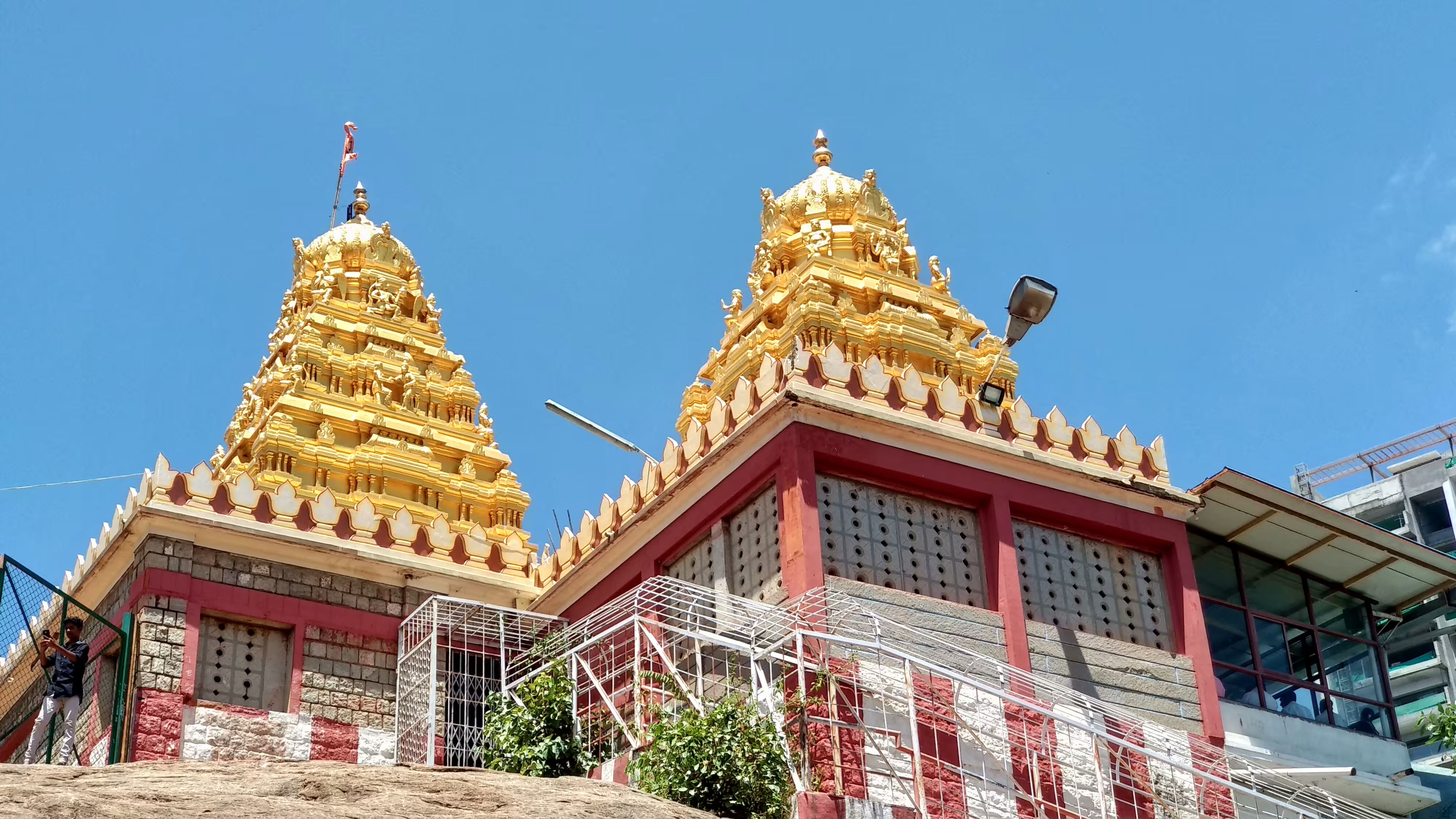
Photo source: Thrillophilia
Ragigudda station is defined almost entirely by the climb to Ragigudda Anjaneya Temple. The ascent itself shapes the experience, separating the temple from the noise and compression of the streets below.
At the top, the city opens unevenly — wide views, steady footfall, vendors, bells, and crowds that feel slightly festive even on ordinary days. This is not a quiet neighbourhood shrine; it is a destination temple that draws people across areas, particularly on weekends and Tuesdays.
Getting off here makes sense when you want collective energy rather than calm.
Other places you could visit nearby
- JP Nagar 1st Phase residential walks
- Local darshini-style eateries downhill
- Small parks around 7th Phase JP Nagar
Jayadeva Hospital: JP Nagar Mini Forest
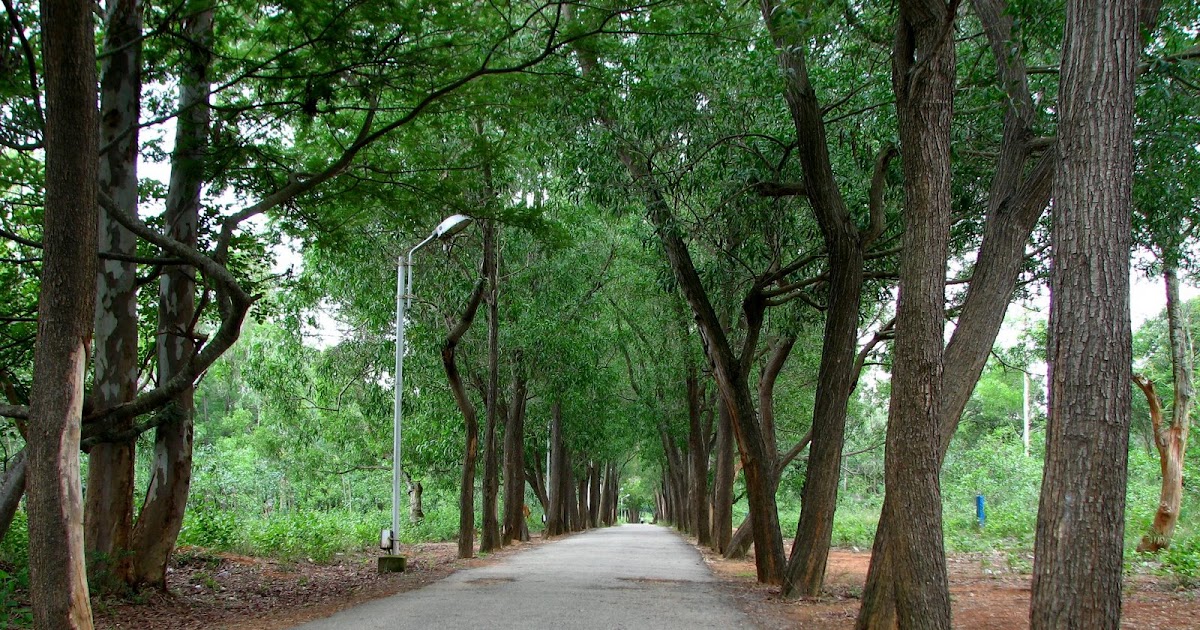
Photo source: I For Nature
Jayadeva Hospital is one of the most emotionally dense stops on the line, but stepping away from it reveals a striking contrast. JP Nagar Mini Forest functions as a deliberate release from urgency.
The space is not designed for spectacle. It offers a contained walking loop used by joggers, morning walkers, and residents who want greenery without crowds. Trees grow densely, paths remain simple, and the rhythm is slow and repetitive.
This stop works best as a pause — somewhere to walk, breathe, and reset before returning to the city’s pace.
Other places you could visit nearby
- JP Nagar residential café streets
- Small neighbourhood parks in 3rd Phase
- Quiet inner roads for evening walks
BTM Layout: 29th Main Food Stretch
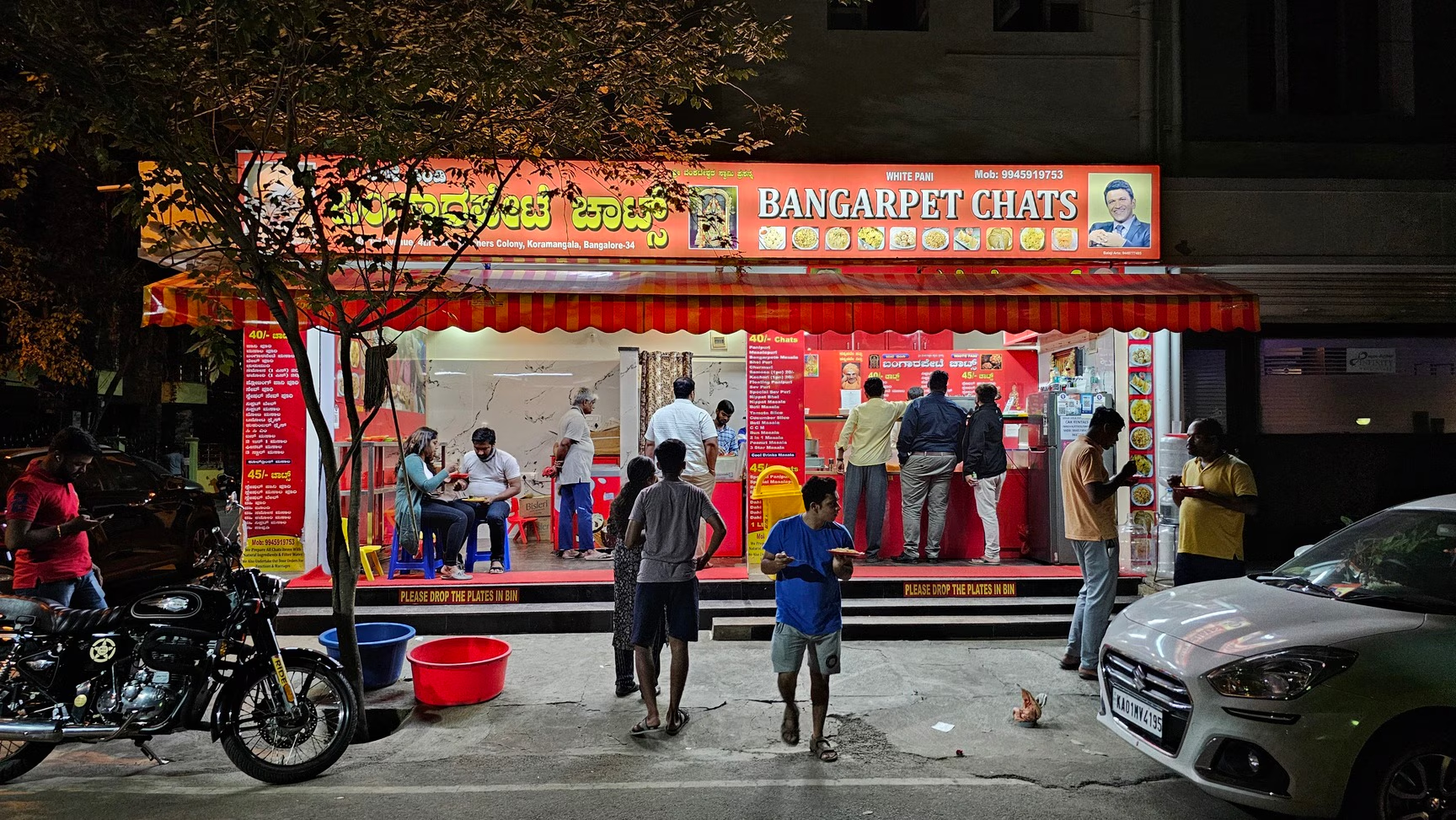
Photo source: Justdial
BTM’s 29th Main is one of Bengaluru’s most functional food corridors. It exists to feed people quickly, affordably, and in large numbers.
Shawarma joints, biryani spots, chaat carts, thick-shake counters, bakeries, and cafés stack tightly along the road and its cross streets. The energy is loud, crowded, and unapologetic. Seating spills onto pavements, orders overlap, and people eat standing without hesitation.
This is not a place for ambience. It is worth getting off at when food is the only priority.
Other places you could visit nearby
- BTM 2nd Stage inner cafés
- Small dessert counters off main road
- Local bakeries and juice shops
Central Silk Board: HSR 27th Main
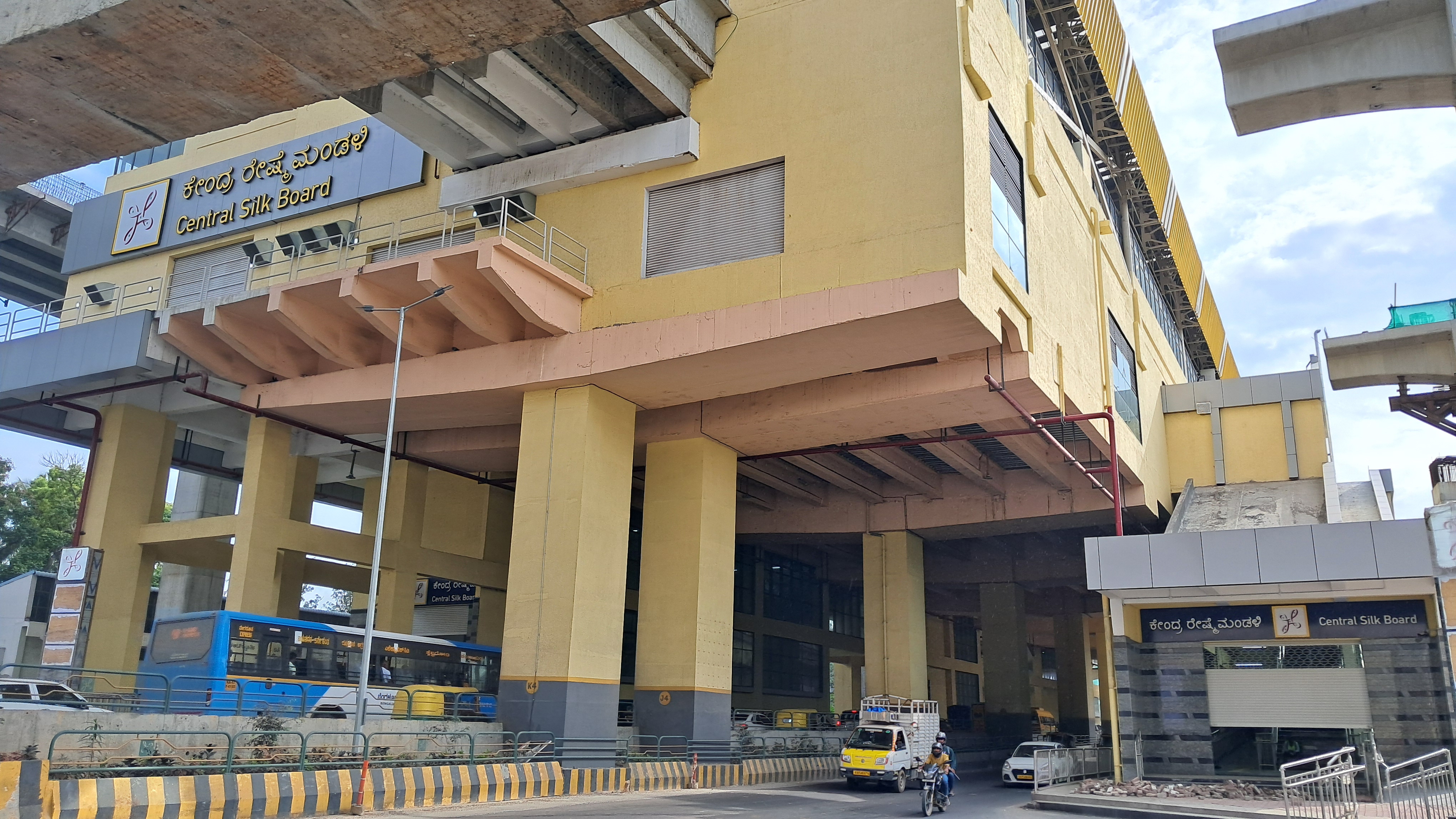
Photo source: Wikipedia
Silk Board is usually associated with congestion, but treating this stop as a gateway changes its meaning. A short ride leads into HSR Layout’s 27th Main and surrounding streets.
Here, cafés, dessert places, and neighbourhood breweries form a compact loop that works well on foot. The appeal lies in density without chaos — many options within a few streets, without needing advance planning or long travel.
It is one of the easiest stops for an unstructured evening.
Other places you could visit nearby
- HSR 17th Cross cafés
- Dessert spots along 27th Main
- Breweries deeper inside the layout
Singasandra: AECS Layout Inner Lanes
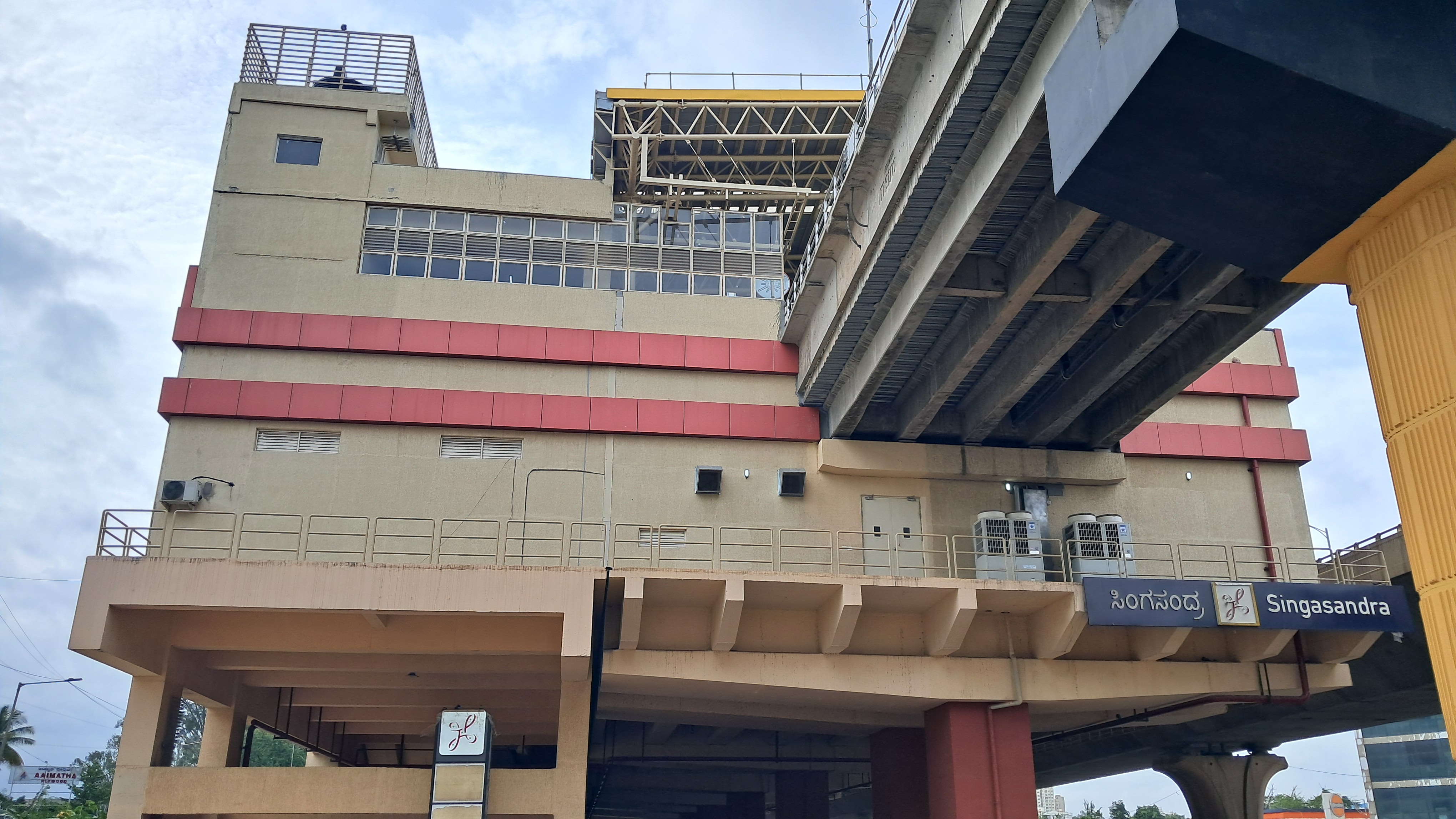
Photo source: Wikipedia
Singasandra offers one of the softest experiences along the Yellow Line. Moving into AECS Layout reveals tree-lined residential lanes shaped by daily life rather than destination traffic.
Small bakeries, provision stores, neighbourhood parks, and evening walkers define the area. There is little to photograph and nothing to “do” — which is precisely the appeal.
This is a stop for slowing down and observing rather than consuming.
Other places you could visit nearby
- AECS Layout pocket parks
- Neighbourhood bakeries
- Quiet residential loops
Hebbagodi: Hebbagodi Lake
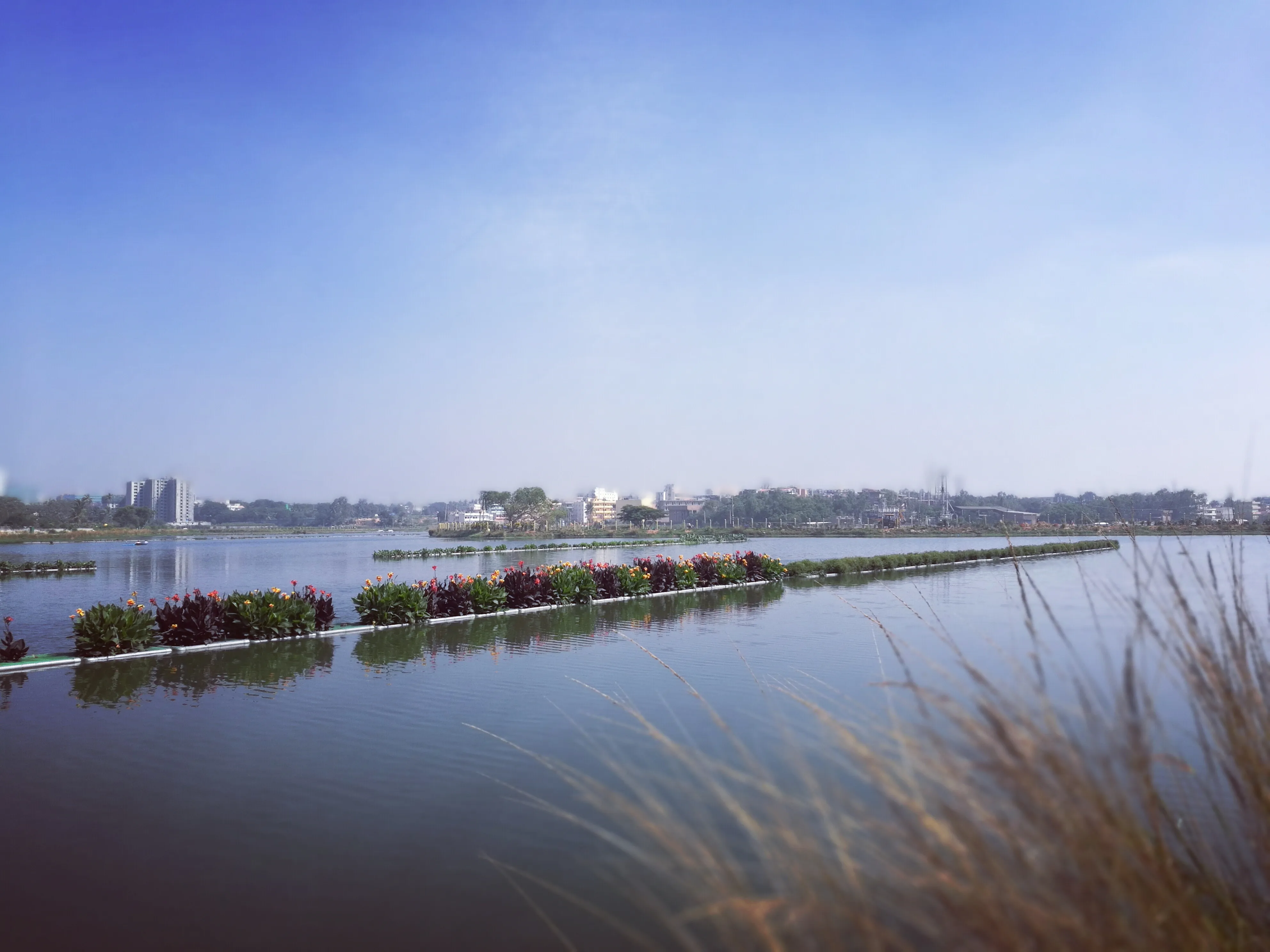
Photo source: The Better India
Hebbagodi marks the thinning edge of the city. Industry and infrastructure dominate the immediate surroundings, but a short distance away, Hebbagodi Lake offers openness and light.
People come here for short walks, evening pauses, and moments of quiet. The lake does not attempt spectacle; it functions as relief — from enclosed spaces, from noise, from speed.
Ending the line here feels appropriate. Movement slows, and the city loosens its grip.
Other places you could visit nearby
- Biocon campus surroundings
- Evening street food near the main road
- Open stretches for sunset walks
Closing note
The Yellow Line does not sell Bengaluru.
It sustains it.
These stops matter because they support routines, workdays, and ordinary movement. They are not destinations to complete, but places that quietly reward attention — one stop at a time.